Surgical Care
Advanced Laparoscopic Surgeries
Summary: Minimally invasive keyhole surgery for faster recovery, less pain, and minimal scarring.
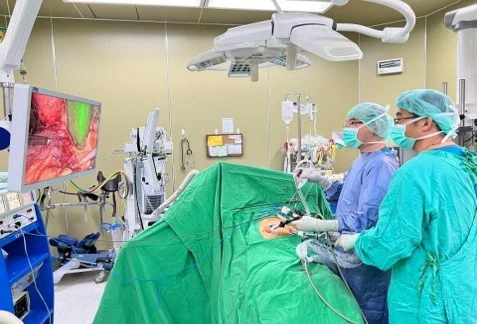
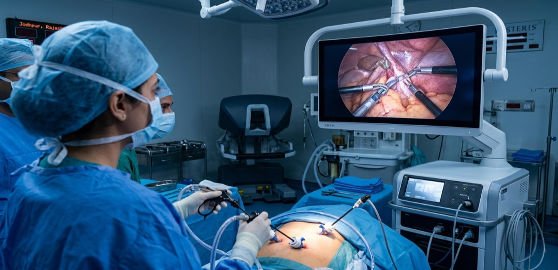
Advanced laparoscopic surgery is a minimally invasive surgical technique performed through small incisions using specialized instruments and a camera. Modern HD/4K imaging systems provide a magnified, clear view of internal organs, helping surgeons perform precise procedures.
It can be used for complex procedures such as gallbladder surgery, hernia repair, bariatric surgery, colorectal surgery and gynaecological procedures.
Compared with many open procedures, minimally invasive approaches may result in smaller scars, less postoperative pain and faster recovery, depending on the operation and patient.
Advanced systems may also incorporate 3D/4K visualization and fluorescence (ICG) technology to improve tissue and anatomical visualization.
Department Highlights
Frequently Asked Questions
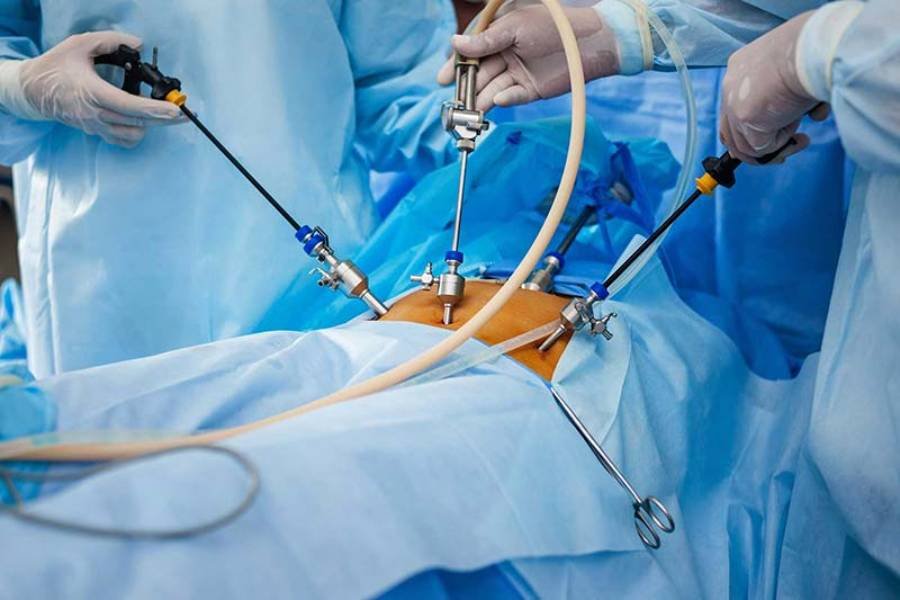
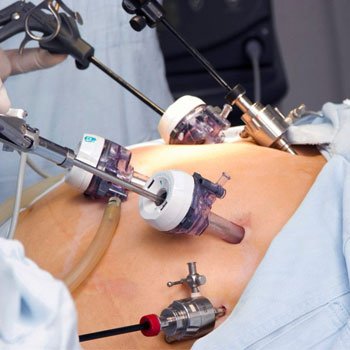
Advanced laparoscopic surgery, often called "keyhole surgery," is a modern, minimally invasive technique. Instead of making a large open incision, the surgeon creates a few tiny cuts (0.5 to 1.5 cm). A thin tube with a high-definition camera (laparoscope) is inserted through one hole to view the organs on a monitor, while specialized precision instruments are used through the other holes to perform the procedure.
It is widely used for complex abdominal and pelvic conditions. Common procedures include gallbladder removal (cholecystectomy), appendix removal (appendectomy), all types of hernia repairs, ovarian cyst or uterine fibroid removal (hysterectomy), and weight-loss surgeries (bariatric surgery).
Because the incisions are so small, healing is very rapid. Most patients are up and walking within a few hours of the surgery. While individuals heal at different rates, most people can safely return to light work and their usual daily routine within 1 to 2 weeks.
Yes, it is highly safe. Modern advancements in high-definition 3D cameras, precision instruments, and specialized energy devices make laparoscopy exceptionally precise. Because the incisions are so small, it also significantly lowers common surgical risks such as excessive bleeding, deep wound infections, and post-operative hernias.
Yes, it is performed under general anesthesia. This means you will be completely asleep, relaxed, and entirely pain-free throughout the entire surgery. Our expert medical team closely monitors your vital signs every second of the procedure to ensure maximum safety.
While a vast majority of patients are ideal candidates, it depends on your medical history. If a patient has multiple previous open abdominal surgeries with extensive scar tissue (adhesions), or severe, severe heart and lung conditions, traditional methods might sometimes be recommended. Our surgeons thoroughly evaluate each patient to determine the safest route.